Canadian companies typically see VoIP cost savings Canada small business of 30% to 60% when migrating from traditional landlines. These financial benefits result from eliminated hardware investments, lower long-distance rates, and scalable monthly subscriptions that ensure firms only pay for the lines they actually use.
For many Canadian small business owners, the monthly telecommunications bill feels like an unavoidable tax on growth. Legacy providers often bundle complex fees and hardware leases that inflate operating expenses without adding modern functionality. As we look toward the 2026 economic landscape, local entrepreneurs must move beyond basic cost cutting to reach true financial efficiency. Alpha Telecom Services understands that a phone system is a critical investment; it is not just a utility. This guide provides a detailed financial breakdown of the transition from traditional landlines to cloud-based VoIP. You will learn about direct monthly savings, the often overlooked hardware strategies that maximize long term value, and how to scale your team across provinces without incurring massive infrastructure costs. We address the hard numbers to ensure your communication budget works as hard as you do.
The Realities of Business Phone Costs in Canada for 2026
Canadian small business owners face a complex financial landscape in 2026. With rising operating costs and interest rates, every line item on the balance sheet requires scrutiny. Data suggests that a significant portion of SMBs across Canada are overpaying for their communication by 30 to 60 percent simply by maintaining legacy copper phone lines. These systems are becoming increasingly expensive to support as the infrastructure ages and technicians become harder to find.
To understand the true VoIP cost savings Canada small business owners can achieve, it is essential to look beyond the sticker price. We focus on the Total Cost of Ownership (TCO). This metric includes the monthly service fee, hardware maintenance, licensing for basic features like caller ID, and the physical upkeep of aging PBX systems.
The scheduled shutdown of copper landline infrastructure across Canada serves as a critical financial motivator. As traditional telcos phase out these services, the cost of maintaining legacy lines will continue to climb. Transitioning to VoIP phone systems in Toronto or other regional hubs now prevents the emergency premiums associated with forced migrations. Investing in modern business VoIP hardware and ongoing technical support today establishes a stable, predictable cost structure for the future.
Direct Monthly Comparison: Landline vs VoIP
The transition from legacy copper to digital infrastructure is most visible when comparing the monthly invoice of a typical 5 to 10 person office. Traditional Canadian telecommunications giants often charge between $60 and $100 per physical line. For a 10-person team requiring dedicated extensions, this base cost starts at $600 before a single minute of long distance is dialed. In contrast, modern VoIP solutions typically range from $20 to $40 per user, providing an immediate reduction in fixed overhead.
Expense Item | Traditional Landline (10 Users) | VoIP Solution (10 Users) |
|---|---|---|
Monthly Service Fee | $600 to $1,000 | $200 to $400 |
Long Distance (CAN/USA) | Per-minute or $15+ packs | Included |
Basic Features (ID, VM) | $5 to $15 per line | Included |
Total Estimated Bill | $850 to $1,200+ | $220 to $450 |
A major driver of VoIP cost savings Canada small business owners appreciate is the inclusion of unlimited calling across Canada and the USA. Legacy providers frequently treat long distance as a profit center, tacking on per-minute rates or expensive regional packs. These costs fluctuate monthly, making it difficult for finance teams to forecast communication expenses accurately.
Furthermore, the sticker price on a legacy contract rarely reflects the final bill. Traditional invoices are often inflated by obscure regulatory recovery fees and surcharges for features like caller ID or voicemail to email. When choosing VoIP phone systems in Toronto, the price per seat is generally all-inclusive. This transparency allows for predictable budgeting, as the cost only scales when you add a new team member, rather than when you increase your call volume or expand your service area.
The Hidden Line Items Canadian Owners Overlook

While the monthly service fee is the most visible change, the true VoIP cost savings Canada small business owners experience often stem from the elimination of ghost expenses. These are the ancillary charges that populate the second and third pages of a traditional telecom bill, often going unnoticed until they are aggregated annually.
First, consider E911 regulatory fees. In Canada, the CRTC mandates that service providers facilitate Enhanced 911, which automatically associates a physical address with a caller's number for emergency dispatchers. On legacy systems, these fees are often bundled into complex trunk charges or hidden within service packages. With VoIP phone systems in Toronto, these fees are typically transparent and applied per user, ensuring you only pay for your active headcount without mysterious surcharges.
Maintenance is another area where legacy systems drain capital. If a traditional PBX fails or requires a configuration change, the provider must schedule a truck roll. A technician visit in the Greater Toronto Area typically costs between $150 and $300 just for the site visit, before hourly labor or parts are billed. Conversely, VoIP systems allow for ongoing technical support to be handled remotely. Most configuration changes, such as adding a new extension or updating an auto-attendant, happen in the cloud without the need for a service fee or a physical appointment.
Feature licensing is a frequent source of bill bloat. Legacy providers often treat essential modern tools as premium add-ons. It is common to see individual charges of $5 to $10 per line for caller ID, voicemail to email, or call forwarding. In a 10-person office, these minor fees can add $100 to your monthly bill. Modern VoIP includes these features as standard, removing the financial penalty for having a functional communication setup.
Finally, physical infrastructure costs differ significantly. Legacy systems require dedicated copper wiring. If you move into a new office or expand your current space, installing new copper runs can cost $150 to $250 per drop. Because VoIP utilizes your existing data network, you can often bypass these construction costs entirely by using the same business VoIP hardware and Ethernet cabling your computers already use.
Hardware Strategy: Upfront Investment vs Long Term Value
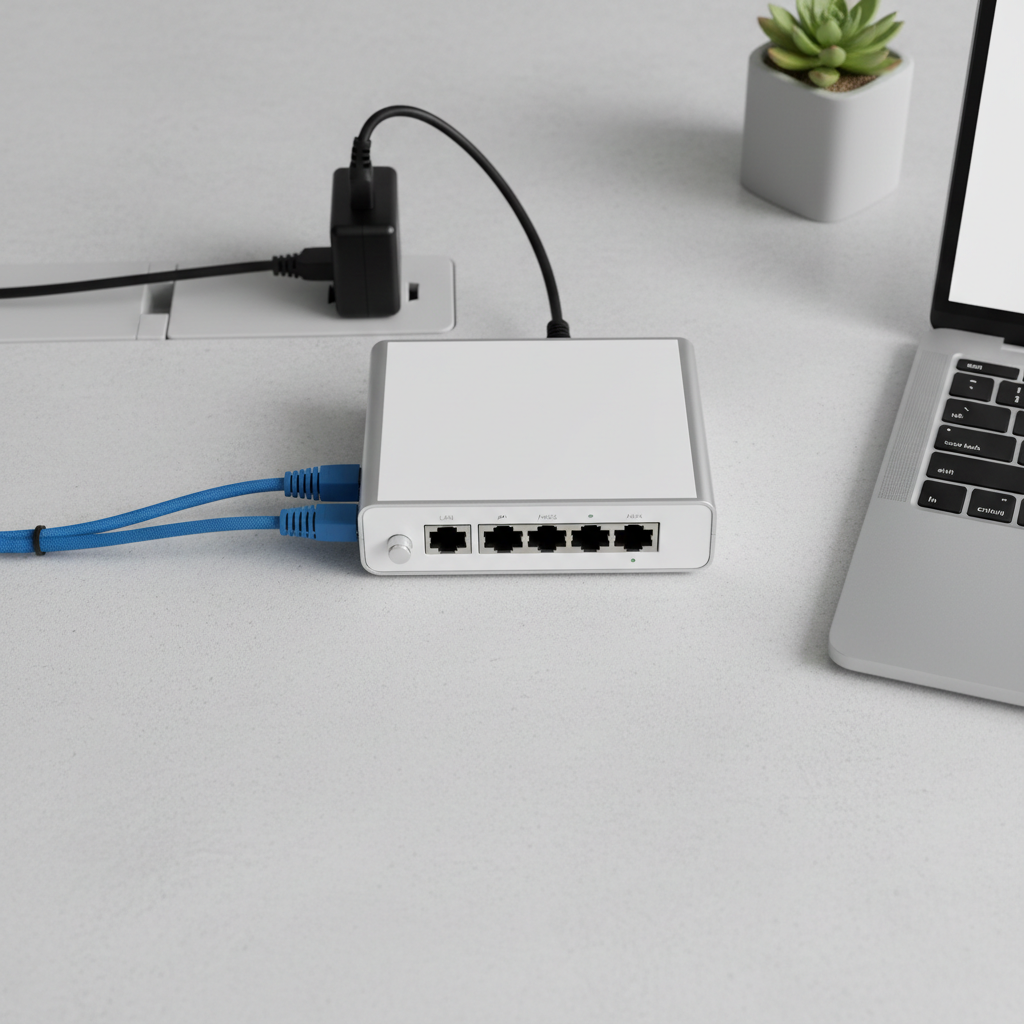
The shift from legacy copper wiring leads directly to a more strategic approach to the devices on your desks. Traditional PBX systems often required proprietary handsets that cost upwards of $400 each; these units were tied to specific vendors and offered little flexibility. Modern business VoIP hardware from manufacturers like Yealink or Yeastar utilizes open standards, providing superior build quality and advanced features at a significantly lower entry price.
A major trend in 2026 for VoIP phone systems in Toronto is the adoption of certified refurbished hardware. Canadian SMBs can save 40 to 60 percent on their initial capital expenditure by choosing pre-owned units that have been professionally tested and updated with the latest firmware. This approach allows a growing company to deploy high-end executive desk phones for the price of entry-level models, accelerating the total return on investment.
Operational efficiency also extends to energy consumption. Traditional desk phones often rely on individual power bricks, which increase electricity usage and clutter workspaces. Most modern handsets utilize Power over Ethernet (PoE), drawing power directly through the network cable. This centralizes power management and is inherently more energy efficient than maintaining dozens of separate power adapters. This shift in hardware strategy is a primary driver of the VoIP cost savings Canada small business owners can expect when they move away from legacy hardware ecosystems.
Soft Savings: How Efficiency Impacts the Bottom Line

Beyond direct invoice reductions, the most significant impact on your balance sheet often comes from reclaimed productivity and captured revenue. For a professional services firm or specialized contractor, a single missed lead can represent a loss of $1,000 or more in potential contract value. Legacy systems frequently drop these opportunities when a line is busy or an employee is away from their desk. Modern VoIP phone systems in Toronto eliminate this risk through mobile app integration and automatic routing, ensuring every inquiry reaches a live person regardless of their physical location.
Consider the operational efficiency of a unified network. A business with a headquarters in Toronto and a distribution center in Mississauga can bridge these locations into a single, cohesive system. This eliminates inter-office calling charges entirely and allows for seamless call transfers between sites as if everyone were in the same room. Managing multiple locations through a single cloud interface simplifies administration and reduces the need for local IT intervention at every branch, further lowering the total cost of ownership.
The "part-time receptionist" effect also provides a tangible return. By implementing an Interactive Voice Response (IVR) or auto-attendant, businesses can automate basic call routing. This feature can save an office administrator three to five hours of manual work every week; time that is better spent on high-value tasks instead of basic call transfers. When calculating the total VoIP cost savings Canada small business owners can achieve, these efficiency gains often match or exceed the savings on the monthly service bill. These improvements are sustained through ongoing technical support that ensures your routing logic evolves as your team grows.
Scalability Costs: Adding a Remote User in Vancouver
Expanding a workforce across provinces traditionally involved a logistical hurdle of local service contracts and physical installations. For a Toronto business hiring a remote account manager in Vancouver, the legacy approach required coordinating with a western carrier to install a physical copper line. This often resulted in installation fees exceeding $200 and a week-long wait for a technician visit.
Modern VoIP phone systems in Toronto eliminate these geographical barriers. Scaling to a new city is now as simple as adding a user license in a web portal. We utilize zero-touch provisioning, where pre-configured business VoIP hardware is shipped directly to the employee. Once the user connects the phone to their internet, it automatically synchronizes its configuration settings from the cloud. This process removes the need for expensive IT labor or local site visits, as any further adjustments are handled via ongoing technical support remotely. By avoiding the typical $150 to $300 technician fee for remote setups, companies realize immediate VoIP cost savings Canada small business leaders need to maintain a lean, hybrid workforce. This streamlined deployment ensures your new hire is reachable on day one.
Common Objections: Security and Internet Reliability
The most common concern regarding VoIP phone systems in Toronto involves the single point of failure risk of an internet outage. Critics often point to internet dependency as a disadvantage, yet this overlooks the inherent vulnerabilities of legacy hardware. A physical line cut during local construction or a power failure at the office can render a traditional PBX useless for days. In contrast, cloud-based systems offer superior resilience through automatic failover.
If your primary office connection drops, calls are instantly rerouted to mobile apps or secondary locations. This ensures that a $1,000 lead never hits a dead end. Strategically, the VoIP cost savings Canada small business owners generate usually exceed the cost of a secondary backup internet line. Investing $60 to $90 monthly in a redundant 5G or fiber link creates a net positive for business continuity while still keeping total communication costs far below legacy rates. When paired with ongoing technical support to configure these protocols, your business VoIP hardware becomes part of a disaster recovery plan that analog systems simply cannot replicate. Modern encryption also ensures these digital calls remain more secure than unencrypted copper transmissions.
Transitioning to a modern phone system offers Canadian small businesses a clear path to reducing overhead while increasing operational flexibility. By understanding the true financial breakdown, you can make an informed decision that supports your growth. If you want expert help navigating these options or setting up a system that fits your specific requirements, you can explore our Services to find the right fit for your team. We are here to ensure your transition is smooth and efficient.