

To effectively protect business phone system spam calls Canada, organizations should implement STIR/SHAKEN authentication protocols to verify caller identities and prevent spoofing. Additionally, businesses can stop unwanted traffic by registering with the National Do Not Call List and securing VoIP networks with strong passwords and restricted access to prevent toll fraud.
For many Canadian organizations, the ringing of a desk phone has shifted from a sign of opportunity to a potential security breach. Constant interruptions from robocalls and sophisticated vishing attempts do more than just lower employee productivity; they expose your infrastructure to significant financial risks like VoIP toll fraud. Relying on outdated defensive measures or basic registry listings is no longer a viable strategy in a landscape where attackers easily spoof local identities to bypass trust. This guide explores the critical landscape of telecommunications security in Canada. You will learn about the impact of the STIR SHAKEN mandate, the technical nuances of preventing unauthorized call routing, and the specific steps required to fortify your VoIP system against modern threats. By implementing these professional protocols, you can regain control over your communication channels and protect your bottom line.
The Growing Threat of Vishing and Spam Calls for Canadian Businesses
The telecommunications landscape in Canada, particularly within major economic hubs like Toronto, has seen a significant shift in how threat actors target organizations. While residential users often face annoying telemarketing calls, Canadian businesses are increasingly under siege by sophisticated vishing (voice phishing) campaigns. Vishing is a form of social engineering where attackers use voice communication to deceive victims into disclosing sensitive corporate data or authorizing fraudulent financial transfers.
Businesses represent high-value targets because they possess greater financial resources and more valuable data than individual households. Modern fraudsters no longer rely on manual dialing; instead, they leverage advanced VoIP technology to automate thousands of calls simultaneously. This is often coupled with AI-driven voice cloning, where a short audio sample of a company executive is used to create a realistic simulation of their voice. A single successful vishing attempt can lead to a devastating breach or significant financial loss.
The operational risk for a Toronto-based enterprise is profound. Beyond the threat of data theft, a high volume of spam can effectively execute a denial of service on your voice infrastructure, tying up customer service lines and preventing legitimate clients from reaching your team. Unlike residential spam, which is a personal inconvenience, business-targeted vishing is a direct threat to your bottom line. Addressing these vulnerabilities requires more than just reactive blocking; it necessitates a proactive strategy to protect business phone system spam calls Canada wide. Professional Technical Support and robust system configurations are the first line of defense against these evolving digital threats.
Understanding Caller ID Spoofing and the STIR SHAKEN Mandate in Canada
Caller ID spoofing operates by exploiting the flexibility of Session Initiation Protocol (SIP) headers. Attackers manipulate the caller information to display a trusted local 416 or 647 area code, or even the official number of the Canada Revenue Agency (CRA). This tactic, known as neighbor spoofing, is designed to bypass the natural skepticism employees have toward long-distance or international numbers. By making a fraudulent call appear as a local Toronto inquiry, attackers significantly increase their chances of a successful connection.
To combat this, the CRTC introduced the STIR/SHAKEN mandate. This framework acts as a digital handshake between service providers to verify that the caller ID displayed is actually the number from which the call originated. While this is a major step forward, it is important to understand that STIR/SHAKEN is an identity verification tool, not a blocklist. It confirms who is calling, but it does not determine the caller's intent.
On modern hardware, such as devices integrated with a 3CX PBX Phone System, a verified call typically displays a checkmark or a "Verified" tag on the screen. Unverified calls may show a "Potential Spam" warning or lack a verification indicator entirely. Ensuring your provider is fully compliant with these protocols is essential to protect business phone system spam calls Canada wide. Beyond filtering incoming threats, compliance ensures your own legitimate outbound calls are properly signed, preventing your business from being erroneously flagged as spam by others. If your current system lacks these visual indicators, it may require professional Installation Programming to align with modern security standards.
VoIP Toll Fraud: The Costly Threat to Your Business Bottom Line
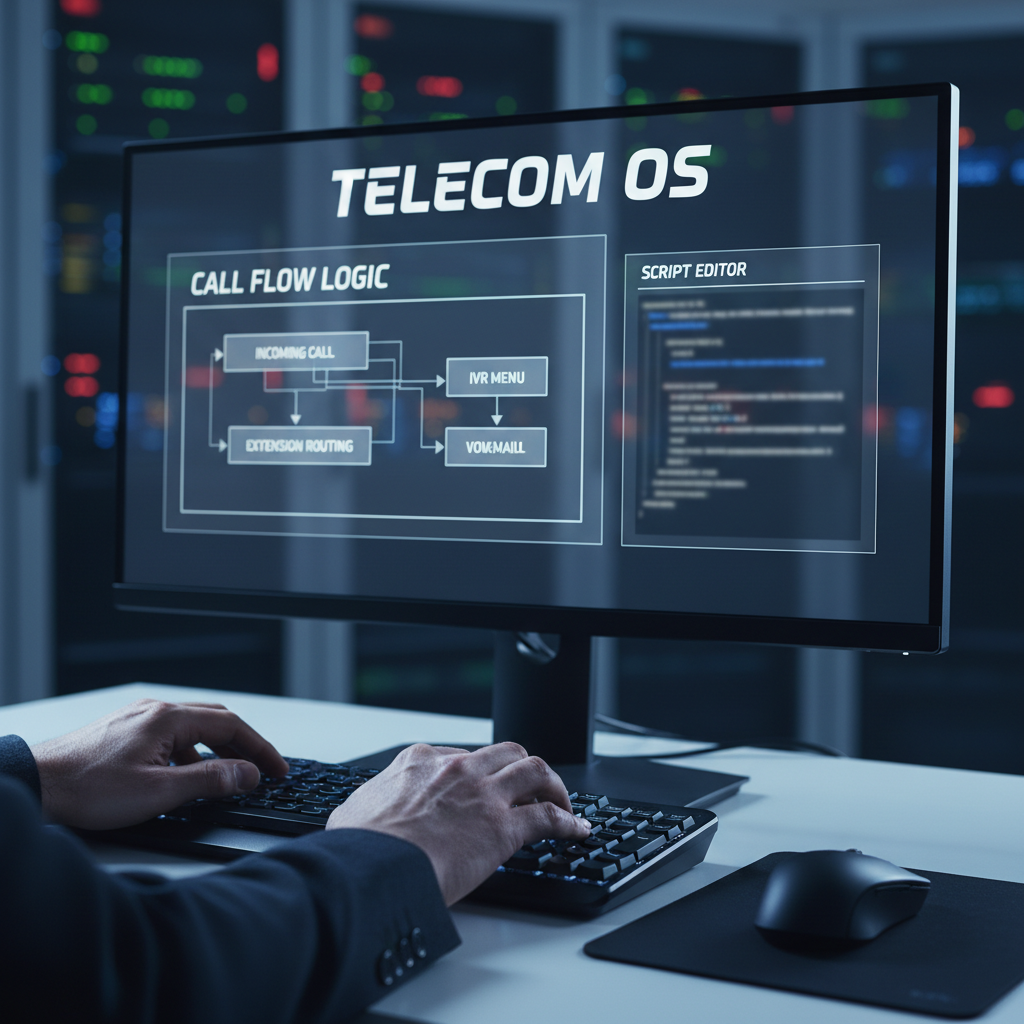
Protecting your communication infrastructure involves recognizing the difference between a nuisance and a financial attack. While spam calls disrupt workflow, VoIP toll fraud, also known as International Revenue Share Fraud (IRSF), targets your company's credit line directly. This occurs when malicious actors exploit weak SIP credentials, unpatched PBX systems, or exposed management interfaces to hijack your outbound lines. Once they gain unauthorized access, they route thousands of high-cost international calls to premium-rate numbers they control, pocketing a portion of the per-minute charges.
For a Toronto small business, the financial impact is often immediate and severe. Because these attacks frequently occur over long weekends or after business hours when monitoring is low, a company can rack up thousands of dollars in fraudulent charges before the breach is even detected. Unlike spam, which merely wastes time, toll fraud is a direct theft of capital. This is why it is critical to go beyond basic filters to protect business phone system spam calls Canada wide and address the actual security vulnerabilities in your hardware.
Prevention requires a combination of robust Technical Support and proactive system management. One of the most effective strategies is to disable all international calling destinations that your business does not explicitly require for daily operations. If your team only communicates within North America, there is no reason to leave routes to high-risk zones active. Ensuring your system has received proper Installation Programming includes setting up these restrictions and enforcing strong, unique passwords for every SIP extension, effectively closing the doors that fraudsters rely on to exploit business accounts.
Why the National Do Not Call List is Not Enough for Businesses
Many business owners in Toronto assume that registering their lines on the National Do Not Call List (DNCL) will stop the influx of unwanted interruptions. However, the DNCL is designed primarily for residential consumers. Under the CRTC's Unsolicited Telecommunications Rules, business to business (B2B) calls are exempt; this means legitimate telemarketers are still legally permitted to contact your office for commercial purposes.
Furthermore, the registry relies entirely on the compliance of legitimate organizations. Criminal actors, by definition, ignore these regulations. Relying on a registry to protect business phone system spam calls Canada wide is an insufficient security posture because scammers often view these lists as catalogs of active numbers rather than boundaries. For professional offices, the focus must shift from registry enrollment to active technical defense. When receiving suspicious calls, employees should be trained never to provide sensitive data or follow automated prompts to "opt out," as this often confirms a live connection to the fraudster. Genuine protection requires robust Installation Programming and Technical Support to filter calls before they ever reach an employee's desk.
Practical Technical Defenses for Your VoIP Phone System

Moving beyond passive registries requires a multi layered approach to hardware and software configuration. To protect business phone system spam calls Canada wide, organizations must transition to an active defense posture that treats the PBX as a secured network gateway. Alpha Telecom Services recommends implementing the following technical configurations to harden your communication infrastructure:
Deploy an Interactive Voice Response (IVR) or Auto-Attendant: Most automated dialers and bots are designed to connect only when a human voice is detected. By requiring callers to navigate a menu, such as "Press 1 for Sales," you effectively filter out the vast majority of robocalls that lack the intelligence to navigate DTMF prompts.
Implement PBX Level Filtering: Modern systems allow for sophisticated allow lists and block lists. You can configure your system to automatically reject known malicious IP ranges or specific problematic area codes before the call ever rings an extension.
Enforce Stringent SIP Security: Every SIP extension must use a complex, unique password. Fraudsters often use brute-force attacks on common extensions like 101 or 1000. Professional Installation Programming ensures these credentials are not easily guessed and that management interfaces are not exposed to the public internet.
Restrict Outbound Dialing Profiles: Unless your business operations require regular communication with overseas partners, your PBX should be configured to permit outbound calls to Canada and the US only. This is the single most effective way to mitigate the financial risk of toll fraud.
Enable Anonymous Call Rejection (ACR): This feature automatically rejects calls where the caller has intentionally masked their ID, forcing legitimate callers to reveal their identity to reach your team.
Advanced platforms like the 3CX PBX Phone System and Yeastar hardware offer built-in security modules that provide automated protection. These systems can monitor for unusual traffic patterns and automatically blacklist IP addresses after a specified number of failed authentication attempts. Utilizing these features, alongside dedicated Technical Support, ensures that your system security evolves as quickly as the threats do, providing a vital safety net for your Toronto office.
How to Respond if Your Business Number is Being Spoofed
One of the most frustrating scenarios for a Toronto firm occurs when their own trusted number is hijacked for neighbor spoofing. This happens when a scammer clones your Caller ID to target others in the local 416 or 647 area codes. The result is often backscatter: a sudden influx of return calls and angry voicemails from people who believe you just called them. If this happens, it is important to understand that your physical hardware hasn't necessarily been breached; rather, your identity is being spoofed in the cloud.
To protect business phone system spam calls Canada wide and maintain your reputation, instruct your staff to calmly explain the situation to frustrated callers. Most spoofing cycles are short lived because fraudsters rotate numbers frequently to avoid being flagged by carriers. You should contact your provider for Technical Support to verify that your outbound STIR/SHAKEN attestation is properly configured. While you cannot stop a third party from typing your number into a spoofing tool, professional Installation Programming ensures your own legitimate traffic remains verified, helping to prevent your number from being blacklisted by major Canadian carriers during a spoofing event.
Professional Support: Secure Your Telecom Infrastructure with Alpha Telecom Services

Alpha Telecom Services functions as a dedicated partner for Toronto organizations looking to eliminate technical vulnerabilities. A comprehensive audit of your current communication setup often reveals overlooked risks, such as unpatched firmware or default SIP passwords that invite brute-force attacks. Through precise Installation Programming, our team hardens these entry points and configures firewall rules to block malicious IP ranges known for launching vishing campaigns.
Securing your infrastructure requires specialized knowledge of modern platforms. Our technicians bring deep expertise in optimizing the 3CX PBX Phone System, Yeastar, and E-Metrotel hardware. These systems, when correctly tuned, provide the robust logging and automated blacklisting necessary to protect business phone system spam calls Canada wide. Beyond the initial setup, managed Technical Support serves as a vital monitoring layer. We analyze call records for irregularities, such as unexpected spikes in outbound international traffic or repeated authentication failures on remote extensions.
This proactive oversight identifies signs of a breach, such as account takeovers or call forwarding abuse, long before they result in significant financial loss. Partnering with a local expert ensures your voice network remains a reliable asset rather than a liability. By closing the specific gaps that lead to toll fraud and neighbor spoofing, we allow your team to focus on operations without the constant interruption of fraudulent traffic.