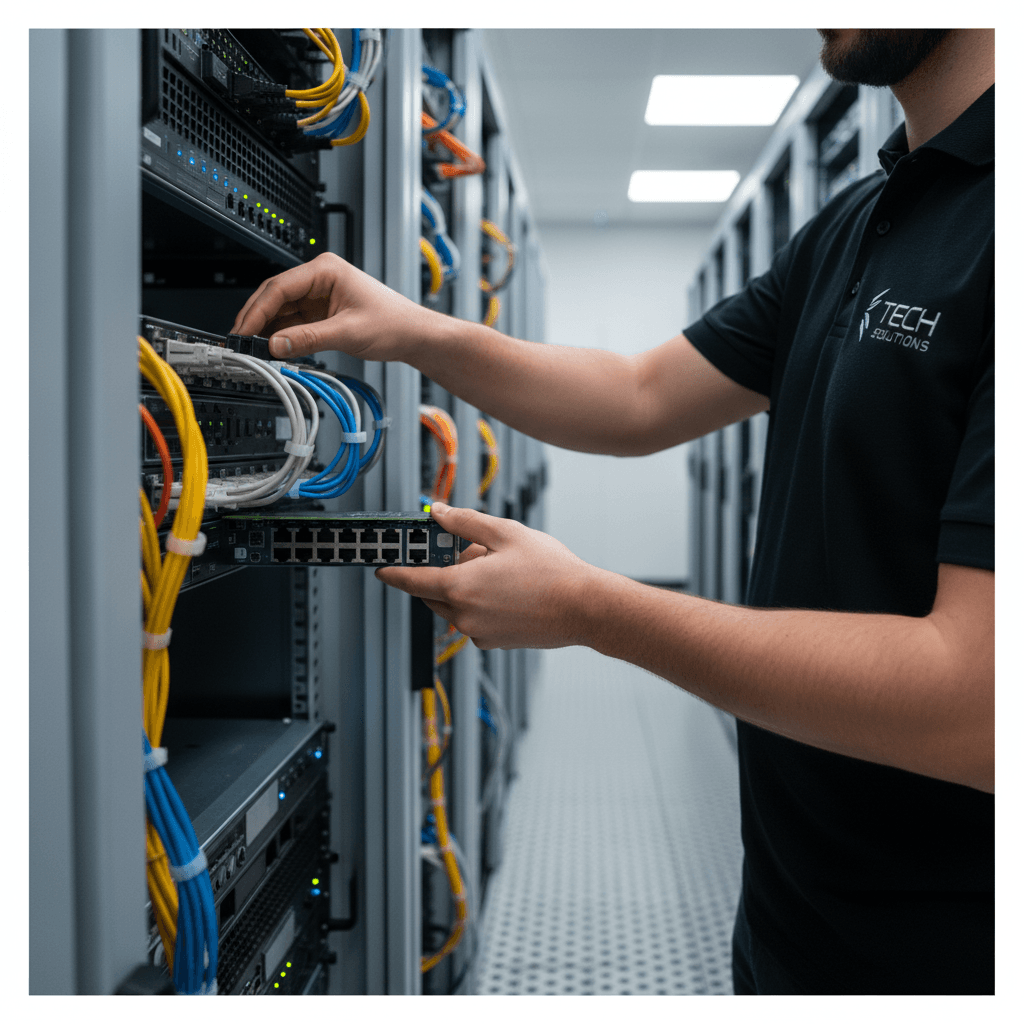

Effective strategies for a VoIP phone system outage business continuity Canada include implementing real-time failover, uninterruptible power supplies, and automated call rerouting to mobile apps. These measures ensure that Canadian organizations stay connected during internet or power failures; allowing communication to transition seamlessly to functional devices and preventing any loss of service.
Imagine the sudden silence of a busy Toronto sales floor or a Vancouver medical clinic when the dial tone disappears. For Canadian businesses, a VoIP outage is more than a technical inconvenience. It represents lost revenue, damaged client relationships, and a total halt to operations. Whether the cause is a localized power grid failure or a national internet disruption, your ability to remain reachable is the cornerstone of professional reliability. In this guide, Alpha Telecom Services examines the critical differences between internet and power failures. You will learn how to implement automated call failover, deploy essential hardware like LTE backups, and leverage mobile extensions to ensure your communication remains uninterrupted. We provide the practical framework needed to build a resilient disaster recovery plan tailored for the unique infrastructure of the Canadian market.
Does VoIP Work Without Internet or Power? The Quick Answer
A VoIP phone system outage business continuity Canada strategy begins with understanding exactly what happens when the lights go out or the fiber line is cut. The short answer is that while your physical desk phones require local power and internet to function, your phone system itself remains fully operational in the cloud.
In a traditional on-premise setup, a local failure meant a total communication blackout. With modern Hosted PBX solutions, the core infrastructure resides in secure, redundant data centers rather than a closet in your Toronto office. If a winter storm or construction-related cable cut disconnects your building, the handsets on your desks will lose their registration and go silent, but the incoming calls still reach the hosted platform.
This distinction is critical for business continuity. Because the "brain" of the system, such as a 3CX PBX Phone System, stays active, it can continue to execute automated routing rules. The system sees that your office handsets are unreachable and instantly triggers failover protocols, such as sending calls to mobile apps or external numbers. Your clients never hear a busy signal or a "disconnected" tone; they experience a seamless professional response while your team manages the local technical issues.
The Anatomy of a VoIP Outage: Internet Failures vs. Power Disruptions

Understanding the mechanics of a failure is the first step toward effective mitigation. In a typical office environment, a VoIP phone system outage business continuity Canada strategy must address two distinct scenarios: loss of connectivity and loss of power.
An internet outage is often external, caused by service provider issues or physical damage to infrastructure. In the GTA, construction projects frequently lead to accidental fiber cuts, severing the link between your office and the outside world. When this happens, your desk phones lose their registration, essentially losing their handshake with the provider. Any active conversations will drop immediately because the data packets can no longer reach their destination. While your local network might still allow computers to talk to each other, the gateway to the public switched telephone network (PSTN) is closed.
Power disruptions present a different physical challenge. During severe Ontario winter storms, surges or outages can shut down your network switches and routers. Because most modern VoIP handsets rely on Power over Ethernet (PoE), a loss of building power means your phones go completely dark. The local network goes offline, and the physical hardware becomes paperweights until the current is restored.
The critical distinction lies in the state of your Hosted PBX solutions. Unlike legacy systems where the hardware lived in your server room, a cloud-hosted 3CX PBX Phone System remains fully operational in a geographically redundant data center. The platform does not know your building is in the dark; it simply sees your desk phones as unreachable. This allows the system to remain active and ready to execute the failover protocols your technical support services team has configured.
How Call Failover Keeps Your Canadian Business Reachable

A robust VoIP phone system outage business continuity Canada strategy relies on the intelligence of the cloud to bridge the gap during local failures. The mechanics of this process involve a continuous communication loop between your Toronto office hardware and the hosted server. In a stable environment, the system maintains a constant keep-alive signal or registration handshake. When a local power or internet failure occurs, this handshake is broken. The Hosted PBX solutions immediately detect that the local extension is unreachable and initiate a predetermined logic tree for call handling.
This automatic failover happens at the network level, meaning the caller never experiences the silence or busy signals associated with traditional hardware failures. With a 3CX PBX Phone System, these routing rules are highly customizable. You can configure the system to prioritize different layers of redundancy based on the severity of the situation. For instance, the system can instantly reroute calls to a mobile app extension using the employee’s cellular data plan, ensuring the business caller ID remains intact.
If the mobile app is also unavailable, the system can move to the next layer, such as routing calls to a secondary office location in a different city or a dedicated external cell number. This ensures that critical client inquiries are always answered by a live representative rather than getting lost in a local technical vacuum. Our technical support services team typically configures these 'If Unreachable' rules during the initial setup to ensure your Canadian business remains operational, regardless of local infrastructure challenges like GTA winter storms or utility maintenance.
Essential Hardware for Business Continuity: UPS and LTE Failover
Maintaining local hardware uptime requires a dual-pronged approach involving power protection and redundant connectivity. The most immediate threat to a Toronto office desk phone is a loss of electricity to the network switch. Because most VoIP handsets utilize Power over Ethernet (PoE), they rely on the office switch for both data and power. Implementing an Uninterruptible Power Supply (UPS) for your core network rack ensures that routers, switches, and local hardware for Hosted PBX solutions stay powered during momentary fluctuations or short-term blackouts. A high-quality UPS filters dirty power and provides the critical minutes needed to keep communications active until a generator kicks in or the grid stabilizes.
While power is one side of the equation, a primary fiber line failure is equally disruptive. Modern networking hardware now supports LTE and 5G failover as a standard redundancy feature. These specialized routers constantly monitor the health of your primary ISP connection. If the fiber link from providers like Rogers, Bell, or Telus is severed, the router automatically switches to a cellular data connection within seconds. This process is so rapid that active sessions on a 3CX PBX Phone System often remain connected; at the very least, they reconnect immediately without employee intervention.
Continuity Component | Primary Function | Estimated Operating Cost (CAD) |
|---|---|---|
Basic LTE Failover | Provides backup data for critical voice traffic | $30 to $60 per month |
High-Capacity 5G Failover | Full office redundancy for data and voice | $80 to $150 per month |
Rack-Mount UPS | Prevents PoE switch and router shutdown | $200+ (One-time investment) |
Investing in this hardware is a practical pillar of a VoIP phone system outage business continuity Canada strategy. Our technical support services team recommends auditing your hardware annually to ensure UPS batteries are viable and cellular SIM cards remain active. By stabilizing the local environment, you reduce the frequency of system-wide failovers and maintain a professional presence even when local utility infrastructure fails.
Mobile App Extensions: The Ultimate Backup Strategy
Beyond physical infrastructure like LTE failover, the most versatile tool in a VoIP phone system outage business continuity Canada strategy is the mobile softphone application. While desk phones remain tethered to the office network, mobile extensions for Hosted PBX solutions transform any smartphone into a fully functional business terminal. In the event of a local blackout or a cut fiber line, staff can simply disable their Wi-Fi and rely on cellular data to remain active in the call queue.
This capability is a hallmark of the 3CX PBX Phone System, which allows employees to answer calls, perform transfers, and access shared company directories as if they were sitting at their desks. Crucially, when an employee makes an outbound call via the app, the recipient sees the official company caller ID rather than a private mobile number. This maintains a consistent, professional image even during a local crisis, ensuring clients are unaware of any technical difficulties behind the scenes. Our technical support services team ensures these apps are pre-configured so the transition from a desk phone to a mobile device is instantaneous, requiring no manual intervention from the user when the office environment goes dark.
How to Create a VoIP Disaster Recovery Plan for Your Office

Building a resilient VoIP phone system outage business continuity Canada strategy requires moving beyond theoretical preparedness into active planning. A disaster recovery plan is not a static document kept in a drawer; it is a live protocol that ensures your Toronto office remains functional when local infrastructure fails. While many businesses conflate Business Continuity Planning (BCP) and Disaster Recovery Planning (DRP), they serve different roles. BCP is the overarching strategy for keeping your business operational, such as having staff work from home during a GTA snowstorm. DRP is the technical subset focused specifically on restoring your Hosted PBX solutions and data connectivity to a functional state.
To ensure your office is ready, follow this step by step checklist:
Audit your network hardware: Verify the age and health of your UPS batteries. Confirm that your LTE failover router has an active SIM card with an adequate data plan from a provider like Bell or Rogers. Ensure all critical hardware is plugged into battery-backed outlets.
Configure 'If Unreachable' rules: Access your 3CX PBX Phone System management console to define what happens when a handset loses registration. A standard hierarchy includes routing first to the mobile app, then to a secondary office, and finally to a cell phone or a voicemail-to-email service.
Test your failover monthly: A plan is only valid if it works under pressure. Periodically disconnect your primary fiber line during a low traffic period to observe how quickly the LTE backup takes over and if the 'If Unreachable' rules trigger correctly.
Train your staff: Employees must be comfortable switching to cellular data and using the mobile app interface before an emergency occurs. Our technical support services team can provide training sessions to ensure your team knows exactly how to handle a local outage without panic.
Ongoing testing ensures that small changes in your office network do not create large gaps in your recovery strategy. By treating telecom resilience as a routine part of your operations, you protect your professional reputation and your bottom line.
Maintaining constant connectivity in the face of a VoIP outage requires a proactive strategy and reliable infrastructure. By prioritizing redundancy and understanding the unique landscape of Canadian telecommunications, you can safeguard your business against unexpected disruptions. If you would like expert assistance in strengthening your communication framework, Alpha Telecom Services is here to help. Exploring a resilient Cloud PBX can be a natural next step to ensure your operations remain uninterrupted. We are always available to provide the professional support you need for a more secure future.