

Businesses can effectively reduce missed calls VoIP small business Canada by implementing automated features like auto-attendants and intelligent call routing to handle high lead volumes. These cloud-based tools ensure every inquiry is captured via mobile integration and call queuing; consequently, Canadian entrepreneurs can maximize their revenue and improve customer satisfaction.
For a growing Canadian small business, the sound of a ringing phone that goes unanswered is the sound of a missed opportunity. Every missed call represents more than just a momentary silence; it is a potential lead walking away to a competitor who was ready to pick up. In today’s fast-paced market, reliability is the foundation of professional reputation. This article examines how small businesses across Canada can leverage advanced VoIP features to eliminate these gaps in communication. You will learn how to implement strategic tools such as automated attendants, call queuing, and mobile integration to ensure your team captures every inquiry. From voicemail to email transitions to the latest AI text back solutions, we provide the practical roadmap needed to turn your phone system into a sophisticated, 24/7 revenue generator.
The Silent Revenue Killer: Why Canadian Small Businesses Struggle with Missed Calls
Every unanswered ring is a direct hit to your bottom line. Industry data reveals that small businesses miss between 40 to 62 percent of incoming calls; many of these are never tracked or recovered. In hyper-competitive markets like Toronto or Vancouver, these aren't just minor technical glitches. They are lost opportunities that hand revenue directly to your competitors. When a potential client hits a generic, impersonal voicemail, they rarely leave a message. Statistics show that 80 percent of callers hang up if a human or a professional automated system does not greet them. Instead, they return to Google to call the next provider on the list.
For Canadian entrepreneurs, 67 percent of whom prioritize customer retention according to the BDC, this accessibility gap is a major obstacle. The problem is not just that the phone didn't ring; it is that the business appears unavailable or disorganized. Relying on outdated hardware or inadequate technical support services creates a barrier to growth that prevents scaling. To effectively reduce missed calls VoIP small business Canada requires viewing call handling as a core sales strategy rather than a background utility. Without robust hosted PBX solutions, you are operating with a leaky revenue pipeline that loses value every time your team is busy, on-site, or away from the desk.
The Real Cost of an Unanswered Call in the Canadian Market
Understanding the financial damage of an unanswered ring requires moving beyond intuition and into hard data. To determine your specific stakes, apply the Value per Answered Call formula. Divide your monthly revenue generated from phone leads by the total number of calls your team successfully answered. For example, if your firm generates $20,000 monthly from 100 answered calls, each missed call represents a $200 loss in immediate potential.
This figure often overlooks the compounding effect of lifetime value. A missed call from a new prospect is not just a lost transaction; it is the loss of a recurring customer who might have remained loyal for years. In competitive Canadian sectors, one lost client can represent thousands in lost future revenue. Speed is the primary differentiator. Research from the Harvard Business Review shows that the odds of qualifying a lead drop by 10 times after just five minutes. Adhering to the 5 Second Rule for lead qualification, which is the goal of answering or engaging a caller almost instantly, is essential to prevent them from dialing the next competitor on their list.
The complexity increases when you consider the Canadian geography. With six time zones spanning four and a half hours, an Ontario-based business often struggles to maintain reachability for Western Canada. When a Toronto office closes at 5:00 PM EST, it is only 2:00 PM in Vancouver. Without a robust strategy to reduce missed calls VoIP small business Canada teams risk alienating an entire portion of the national market simply because of a clock. Implementing a professional 3CX PBX phone system allows businesses to bridge these gaps through intelligent routing, ensuring provincial borders do not become barriers to growth.
Automated Attendants: Your Digital Front Desk for 24:7 Professionalism
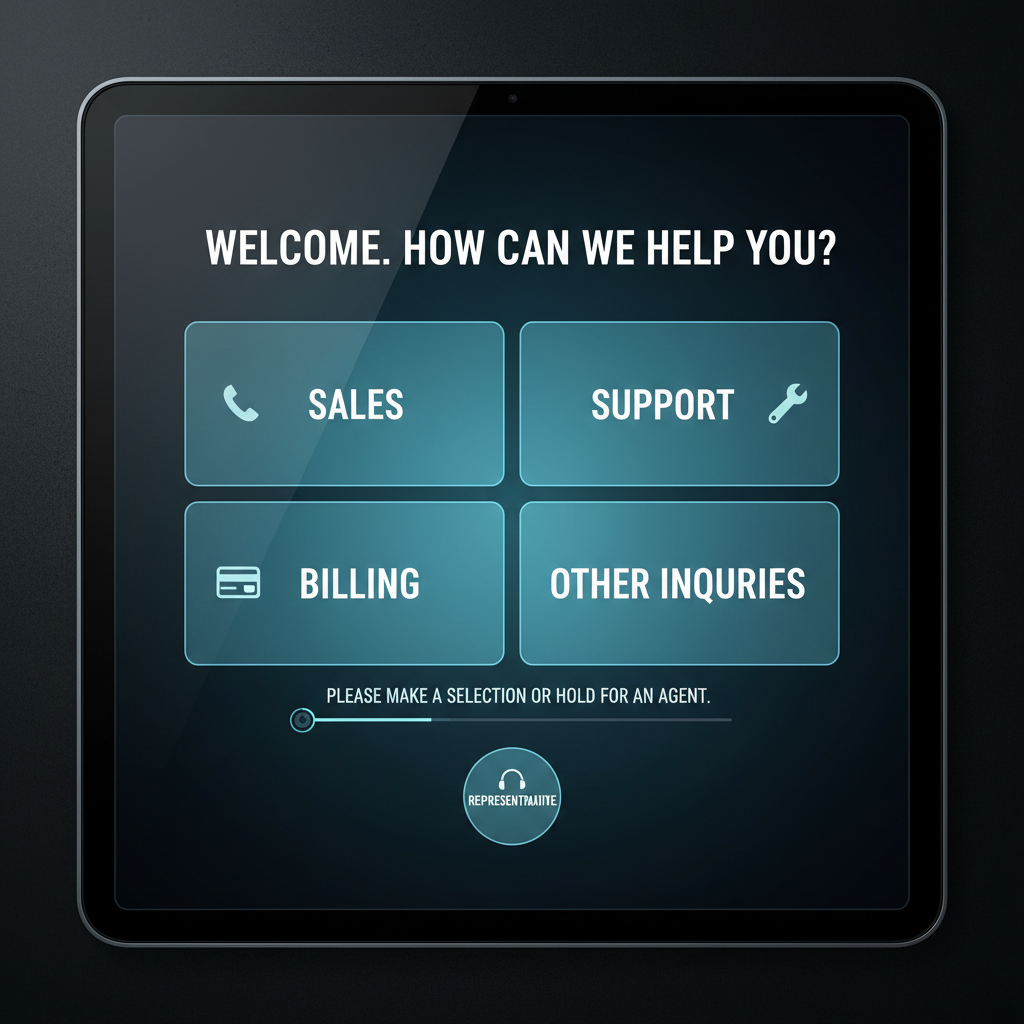
The first step to bridging the accessibility gap is deploying an automated attendant. This feature acts as a virtual receptionist, providing a professional first impression that immediately validates your business. When a client calls, they are greeted by a clear, customized menu rather than silence or a standard dial tone. This instant engagement is critical; it acknowledges the caller's intent and keeps them on the line while your team prepares to answer.
Consider a standard routing configuration: Press 1 for Sales, Press 2 for Support, or Press 3 for Accounting. By segmenting callers, you ensure they reach the correct department without manual transfers. To effectively reduce missed calls VoIP small business Canada organizations often leverage these menus to provide basic information, such as office locations or hours, before a human even picks up. This ensures the caller feels heard even during high-volume periods.
Crucially, automated attendants solve the after-hours problem. You can program specific business hours settings that automatically switch your greeting at 5:00 PM EST. Instead of letting the phone ring indefinitely, the system can provide callers with an emergency contact number, a website URL for self-service, or a clear expectation of when they will receive a callback. Implementing these features through a modern 3CX PBX phone system ensures that your digital front desk remains operational across every Canadian time zone, maintaining professionalism around the clock.
Call Queuing and Ring Groups: Managing Peak Hours Without Extra Staff
Once the automated attendant directs a caller to the correct department, the next challenge is managing volume during peak hours. In sectors like retail or professional services, a sudden influx of calls can overwhelm a small team. Call queuing solves this by placing callers in a professional holding pattern with music or informational messages instead of a busy signal. This keeps the connection live; it is a vital strategy considering that 80 percent of callers will hang up if sent immediately to voicemail.
To further reduce missed calls VoIP small business Canada owners often implement ring groups. This feature, sometimes called simultaneous ring, allows multiple desk phones and mobile apps to ring at the same time for a single department. For an accounting firm in Toronto during tax season, this means the receptionist, an associate, and the office manager all see the incoming lead at once. Whoever is free first answers the call, ensuring the client is greeted by a human rather than a recording.
Feature | Function | Primary Benefit |
|---|---|---|
Call Queuing | Holds callers in a line with music or updates | Reduces hang-ups during peak volume |
Ring Groups | Rings multiple devices simultaneously | Increases speed of lead qualification |
Call Distribution | Cycles calls through available agents | Prevents staff burnout and ensures coverage |
These hosted PBX solutions allow businesses to scale their responsiveness without the overhead of hiring additional receptionists. By effectively distributing the load across existing staff, you maintain a high level of service during high-volume windows.
Mobility Solutions: Using Find Me Follow Me to Answer Calls on the Go

While ring groups manage volume within the office, mobility solutions ensure connectivity for staff in the field. To effectively reduce missed calls VoIP small business Canada teams must utilize Find Me, Follow Me functionality. This feature allows a call placed to a Toronto office extension to route seamlessly to a technician's smartphone while they are on-site or commuting on the 401.
This differs from simple call forwarding because the caller hears no interruption or clicking sounds during the transfer. The employee also maintains professional boundaries; the business identity is preserved and their personal mobile number remains private. Modern mobile VoIP apps, often integrated through a 3CX PBX phone system, are now indispensable for the hybrid Canadian workforce. These apps turn any smartphone into a full-featured business extension. This allows employees to answer, transfer, or hold calls from any location with a data connection, ensuring that your business remains reachable even when the physical office is empty.
Voicemail to Email: Never Lose Track of a Message Again
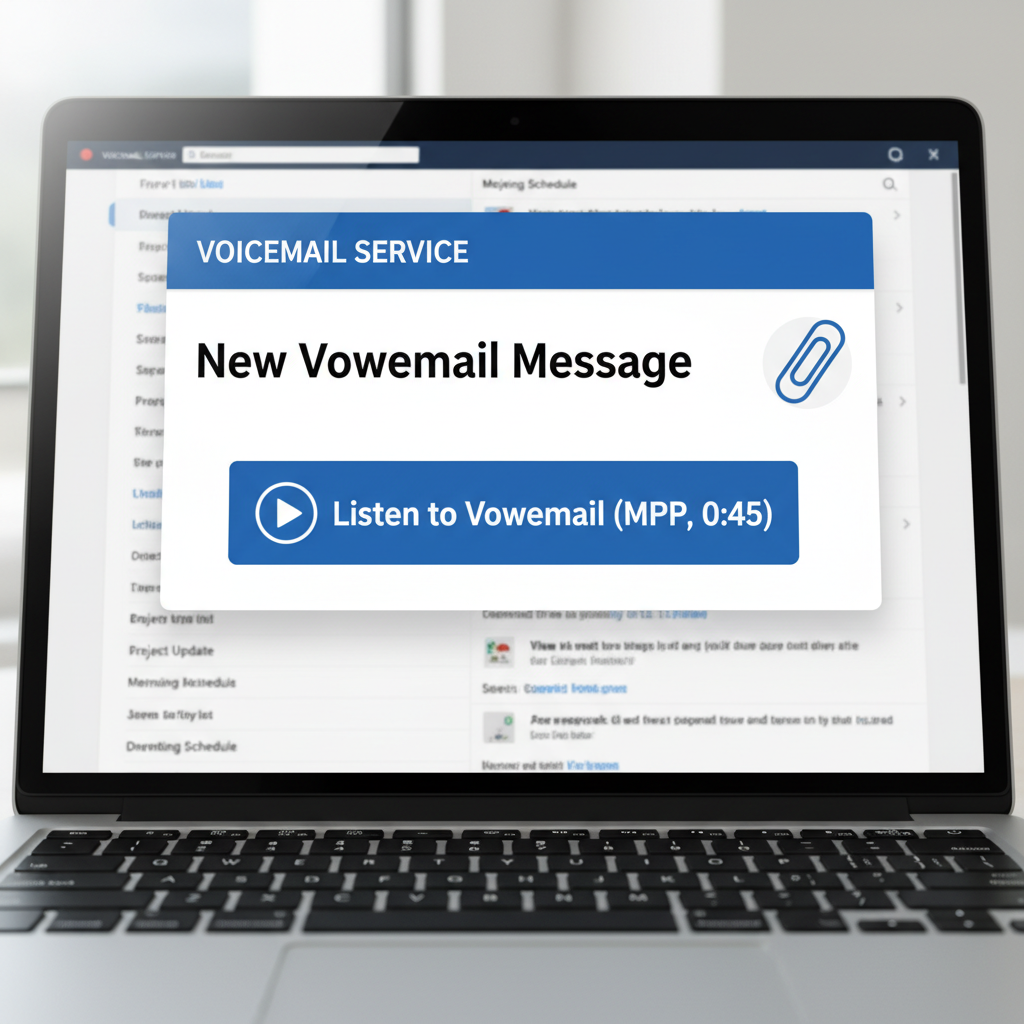
Even with advanced mobility features, some calls will inevitably result in a voicemail. Transitioning from traditional, manual message retrieval to voicemail to email transforms these recordings into actionable data. By converting audio messages into digital files delivered directly to a user's inbox, hosted PBX solutions ensure that staff can review messages as easily as reading an email. This functionality, often described as visual voicemail, allows for rapid scanning of urgent requests without the friction of dialing into a centralized mailbox or navigating cumbersome voice menus.
For professionals in Ontario's legal, medical, or real estate sectors, these email notifications provide a critical digital paper trail. Every client request is timestamped and archived, which is essential for compliance and historical record keeping. Furthermore, these audio files can be instantly forwarded to the appropriate department or specialist, ensuring that a specific inquiry reaches the right person in seconds. To effectively reduce missed calls VoIP small business Canada firms must treat voicemail not as a graveyard for messages, but as an integrated part of a responsive digital workflow managed through a 3CX PBX phone system.
Missed Call Text Back and AI Agents: The Next Frontier of Reachability
Capturing a message via email is a significant improvement, yet the modern Canadian consumer often lacks the patience to wait for a callback. To effectively reduce missed calls VoIP small business Canada companies are increasingly adopting missed call text back. This feature triggers an automated SMS the moment a call goes unanswered, acknowledging the caller with a message such as, "Sorry we missed you. How can we help today?" Since 80 percent of callers do not leave voicemails, this immediate digital touchpoint keeps the lead engaged and prevents them from instantly dialing the next business on Google.
The next layer of reachability involves AI phone agents. With 27 percent of daily call volume arriving between 5 PM and 10 PM, many businesses miss opportunities while the physical office is closed. AI agents integrated into a 3CX PBX phone system can handle routine FAQs or schedule appointments in real time. This ensures the customer feels heard and supported even when a human agent is unavailable, bridging the gap between a missed ring and a confirmed lead. These hosted PBX solutions transform the silent loss of a missed call into an active, automated conversation.
How to Implement a Call Handling Strategy for Your Business

Building a resilient communication framework requires a systematic approach to auditing your current workflow. To effectively reduce missed calls VoIP small business Canada organizations should follow these four steps to optimize their responsiveness:
Analyze Call Logs: Use the analytics tools within your hosted PBX solutions to identify peak hours and abandoned call patterns. Reviewing the last quarter of data will reveal if you are losing leads during the lunch hour, during staff meetings, or after 5:00 PM EST.
Standardize Professional Greetings: Record distinct greetings for business hours, after-hours, and holidays. Professional scripts confirm the caller has reached the right office and provide clear instructions on what to expect next, which significantly reduces the high hang-up rate associated with generic voicemails.
Map Expertise-Based Routing: Configure your 3CX PBX phone system to direct inquiries to the correct department immediately. Routing a technical question directly to a technician, rather than a general receptionist, prevents the friction of multiple transfers and ensures the caller gets answers faster.
Execute Team Training: Ensure every staff member is proficient with mobile VoIP apps. Your team must understand how to manage their status, set their availability, and handle transfers from their smartphones to support a seamless hybrid work environment.
While these steps provide the strategic map, professional installation and programming are the foundation of a reliable system. Expert configuration ensures that complex logic, such as failover routing and hunt groups, operates without technical friction. A properly programmed system allows your staff to focus on the customer while the technology handles the connectivity.