

A cloud-based multi-location business phone system Canada unifies communications by centralizing management and features across all physical offices and remote teams. These VoIP solutions eliminate hardware costs and fragmented billing while ensuring a consistent customer experience through seamless call transfers and mobile integration.
Managing communication across multiple Canadian branches often feels like navigating a fragmented maze of disparate hardware and inconsistent service levels. When internal transfers fail and customers face endless hold times, the operational friction directly impacts your bottom line. As your business expands from Toronto to Vancouver, maintaining a cohesive brand identity requires more than just shared goals; it requires a unified digital infrastructure. This guide explores the transition from rigid legacy systems to flexible, cloud-based solutions tailored for the Canadian landscape. You will learn the critical differences between Cloud PBX and SIP trunking, how to navigate local data sovereignty requirements, and the practical steps to consolidate your communications into a single, scalable ecosystem. By centralizing your voice services, you can eliminate technical silos and ensure your team remains connected, regardless of the physical distance between offices.
The Communication Challenge of Multi-Location Growth in Canada
Expanding a business from a central headquarters in Toronto to additional branches in provinces like Alberta or British Columbia is a significant milestone, yet it frequently exposes critical flaws in communications infrastructure. Many Canadian firms fall into the "silo effect," where each satellite office operates on a localized, disconnected legacy system. This fragmentation results in high long-distance costs for inter-branch calls and creates a disjointed experience for customers who may be transferred between offices only to be dropped or met with different hold music and procedures.
Implementing a robust multi-location business phone system Canada wide involves significant logistical hurdles. The vast geography of the country makes it difficult for a Toronto-based IT team to maintain consistent hardware standards or provide immediate onsite support for a new office in Calgary. When branches use disparate providers or mismatched legacy hardware, administrative overhead increases and internal collaboration suffers. Teams lose the ability to see the real-time presence of colleagues in other time zones, leading to missed connections and delayed projects. Utilizing Cloud PBX solutions or a unified 3CX phone system eliminates these regional silos. Centralizing the communication layer ensures that every branch, regardless of its distance from the GTA, operates as a single, cohesive unit with predictable costs and streamlined management.
Why Traditional PBX Fails the Modern Scaling Business
Legacy on-premise PBX systems were designed for a time when business growth was confined to a single building. For any organization attempting to build a multi-location business phone system Canada wide, these systems quickly transform from assets into expensive liabilities. The primary obstacle is the high capital expenditure (CAPEX) required for every new branch. Opening an office in Ottawa or Vancouver should not necessitate purchasing a proprietary server cabinet, specialized cards, and physical hardware that require an on-site technician to configure.
Beyond the initial cost, traditional hardware creates an administrative burden. Each location essentially becomes a technology island. If you need to update a call routing rule for a holiday, you may have to log into several different local interfaces instead of using a single dashboard. This fragmentation is particularly problematic for the modern hybrid workforce. Legacy systems struggle to extend office extensions to a smartphone or home laptop, often requiring clunky VPNs that result in poor audio quality.
Feature | Traditional On-Premise PBX | Software-Driven / Cloud Solutions |
|---|---|---|
Initial Investment | High CAPEX for per-site servers | Predictable monthly OPEX |
Scaling Speed | Weeks for hardware and wiring | Minutes via digital provisioning |
Management | Decentralized, site-by-site | Centralized web-based console |
Remote Access | Limited or reliant on VPNs | Native mobile and desktop apps |
Moving away from rigid hardware allows for a more flexible infrastructure. Modern software-driven solutions replace the physical server with a virtualized environment, ensuring that the same features and management tools are available to every employee, regardless of their province or time zone. This shift removes the technical barriers that often stall geographic expansion.
Cloud PBX vs. SIP Trunking: Which Foundation is Right for You?
To transition from a legacy setup to a cohesive multi-location business phone system Canada wide, you must choose between two primary technological foundations: Cloud PBX or SIP trunking. Both paths modernize your communication, but they cater to different infrastructure needs and financial strategies.
Cloud PBX solutions are fully hosted in the cloud, meaning you no longer maintain physical servers at any of your locations. This model is ideal for rapid scaling across different provinces. If you open a new satellite office in Vancouver or Montreal, you simply provide a reliable internet connection and VoIP handsets; the system is ready to function as part of your existing network within minutes. It shifts the burden of maintenance and security updates to the service provider, making it a favorite for organizations without large on-site IT teams.
SIP trunking is the preferred choice for businesses that have already invested in a high quality on-premise PBX but need to replace expensive, rigid analog lines with flexible internet-based connectivity. By consolidating digital circuits, SIP trunking can save Canadian businesses 30 to 50 percent on monthly telecom expenses. It eliminates the need for separate contracts with regional carriers for each branch; instead, it routes all voice traffic through a single, centralized provider. This consolidation significantly reduces administrative overhead and long-distance charges between offices.
The 3CX phone system stands out as a versatile choice for either strategy. It can be deployed as a fully hosted cloud instance or installed on a local server using SIP trunks. This flexibility allows a business to start with SIP trunking at a main office in Toronto and gradually transition to a full cloud environment as they expand further into Ontario or other provinces, providing a consistent user experience throughout the transition.
Essential Features for a Unified Multi-Site Experience
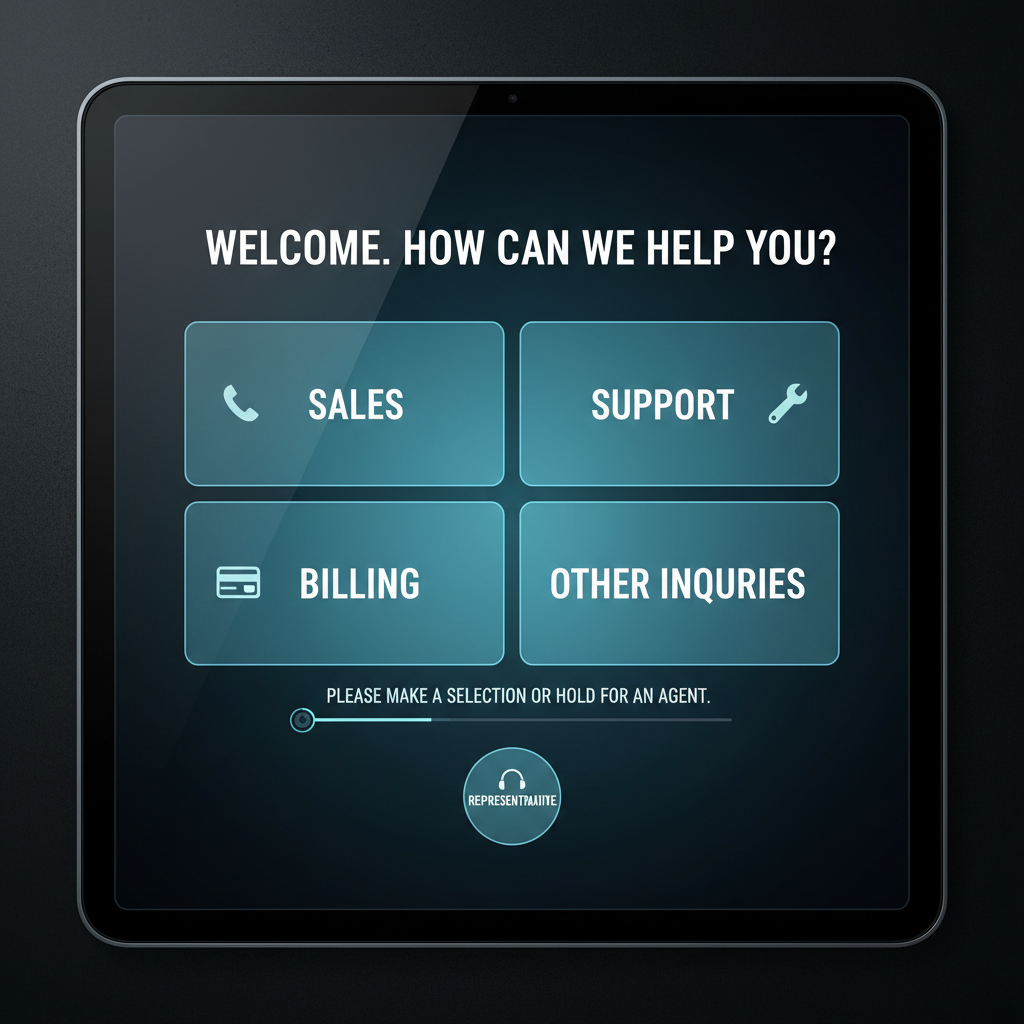
To bridge the distance between a headquarters in the GTA and satellite offices in Alberta or British Columbia, your system must deliver a set of core features that eliminate regional boundaries. When a multi-location business phone system Canada wide is configured correctly, employees interact with colleagues in different provinces as if they were sitting in the next cubicle.
### Extension-to-Extension Dialing and Cross-Site Transfers The most basic yet impactful feature is a unified dial plan. An employee in Toronto should be able to reach a manager in Calgary by dialing a three or four digit extension. This eliminates the need for ten digit dialing and removes inter-office long distance charges entirely. Furthermore, cross-site transfers allow a receptionist in one city to move a live caller to a specialist in another without the customer ever knowing the call has crossed provincial lines. This ensures a professional experience where the caller is not forced to hang up and redial a different regional number.
### Company-Wide Presence Indicators Visibility is often lost during expansion. Unified systems solve this through presence technology, which allows staff to see the real-time status of any colleague regardless of their physical location. If a sales representative in Montreal is already on a call or in a meeting, a team member in Toronto will see a red indicator on their 3CX phone system interface. This prevents wasted time on failed transfer attempts and improves internal collaboration by showing who is available at a glance.
### Centralized Auto-Attendants A single, centralized auto-attendant can serve the entire organization. This allows for a menu such as "Press 1 for Ontario, 2 for the West, or 3 for Billing" that routes calls to the appropriate team anywhere in the country. This creates a professional, consistent brand image while ensuring callers reach the right person quickly, regardless of where the physical hardware is located.
### Streamlining Multi-Line Workflows Understanding how to work multi-line phone systems in a modern context is no longer about managing physical buttons on a desk set. In a unified environment, these systems function through software-driven workflows that automate complex routing. Users manage multiple lines through intuitive digital dashboards, allowing them to drag and drop calls between departments or flip a call from a desk phone to a mobile app with a single click. This simplification is a primary reason Cloud PBX solutions are becoming the standard for growing Canadian enterprises that need to maintain efficiency while scaling.
The Hardware Layer: Selecting VoIP Phones for Multiple Branches

Standardizing your hardware is a critical step in maintaining a reliable multi-location business phone system Canada wide. When every desk from Toronto to Calgary features the same interface, employee training becomes a one-time event rather than a recurring regional headache. We recommend Yealink IP phones for their exceptional build quality and deep integration with modern communication platforms like the 3CX phone system.
One of the most significant advantages of using standardized hardware is the ability to utilize remote provisioning. In a traditional setup, opening a satellite office in another province would require an onsite technician to manually configure every handset. With modern VoIP hardware, this process is automated through Zero-Touch Provisioning (ZTP).
Feature | Impact on Multi-Site Operations |
|---|---|
Remote Provisioning | Phones automatically download settings from the central server upon power-up. |
Unified User Interface | Employees can move between branches without needing to relearn the phone system functions. |
Centralized Firmware | IT can push security patches to all branches simultaneously from a central dashboard. |
By pre-configuring handsets before they ship, we ensure that a new branch in Calgary can be online in minutes. Once the local staff plugs the phone into a standard internet connection, the device identifies itself to the host, downloads its extension settings, and becomes active immediately. This plug and play capability eliminates the need for specialized IT personnel at every physical location, drastically reducing the logistical costs of national expansion.
Data Sovereignty and Compliance for Canadian Businesses
While hardware standardization simplifies the physical rollout, the digital backbone of a multi-location business phone system Canada wide must address data sovereignty. Canadian businesses, especially those in professional services like law or finance, operate under the Personal Information Protection and Electronic Documents Act (PIPEDA). This legislation necessitates a clear understanding of where voice data, call recordings, and metadata are stored. Utilizing a provider that hosts services on Canadian soil ensures that your organization complies with local privacy laws and avoids the jurisdictional complexities of foreign data storage.
Beyond compliance, local hosting provides tangible performance benefits. When voice traffic remains within Canadian borders, latency is significantly reduced; this results in crisper audio and fewer delays compared to systems that route traffic through distant international hubs. By choosing Cloud PBX solutions hosted in local data centers, firms maintain high security standards while ensuring a seamless user experience for clients across every province. This regional focus protects sensitive client interactions from external surveillance risks while optimizing network efficiency for the entire organization.
Practical Steps to Unifying Your Multi-Location Phone System

Transitioning to a unified multi-location business phone system Canada wide requires a structured approach to ensure zero downtime. The process begins with a comprehensive infrastructure audit at every branch. You must verify that local internet bandwidth can handle concurrent voice traffic and that structured cabling is sufficient to support Power over Ethernet (PoE) for your handsets.
Once the network is verified, select a centralized platform. Most organizations choose between Cloud PBX solutions for maximum flexibility or a 3CX phone system for deeper control. After selecting your platform, initiate a pilot phase at a single location. This allows you to fine tune call flows, auto attendants, and ring groups in a live environment before a national deployment.
Following a successful pilot, proceed with a full rollout. This involves deploying standardized Yealink IP phones across all sites. To ensure a seamless transition, prioritize professional installation and programming. Expert configuration is essential to navigate complex firewall settings and network address translation (NAT) issues that frequently cause one-way audio or dropped calls in SIP trunking environments. This methodical path ensures that your communication backbone remains stable as you scale across provinces.
The Hidden Value of Centralized Technical Support
Managing a multi-location business phone system Canada wide often results in administrative burnout when companies try to juggle multiple regional service providers. Instead of navigating the differing support protocols of various legacy telcos in each province, a centralized partnership offers a single point of accountability. A unified partner provides dedicated technical support that understands the entire network architecture, from the head office in Toronto to satellite branches in Vancouver.
This consolidation simplifies operations by providing one itemized bill and a consistent support experience for every employee. By removing the need to coordinate between fragmented regional carriers, IT managers can focus on growth rather than troubleshooting disparate connection issues across time zones. Centralizing your technical assistance ensures that a configuration change in Montreal is executed with the same precision and standard as one in Calgary, maintaining high system integrity across the entire organization.
Streamlining communication across your Canadian offices requires the right technology and a clear strategy. By focusing on centralized management and user consistency, you can significantly improve operational efficiency. If navigating these technical requirements feels complex, Alpha Telecom Services is here to help you design a tailored solution. Transitioning to a robust Cloud PBX system simplifies this process; it provides the scalability your growing business needs. Our team can guide you through every step to ensure your multi-location setup works flawlessly.