
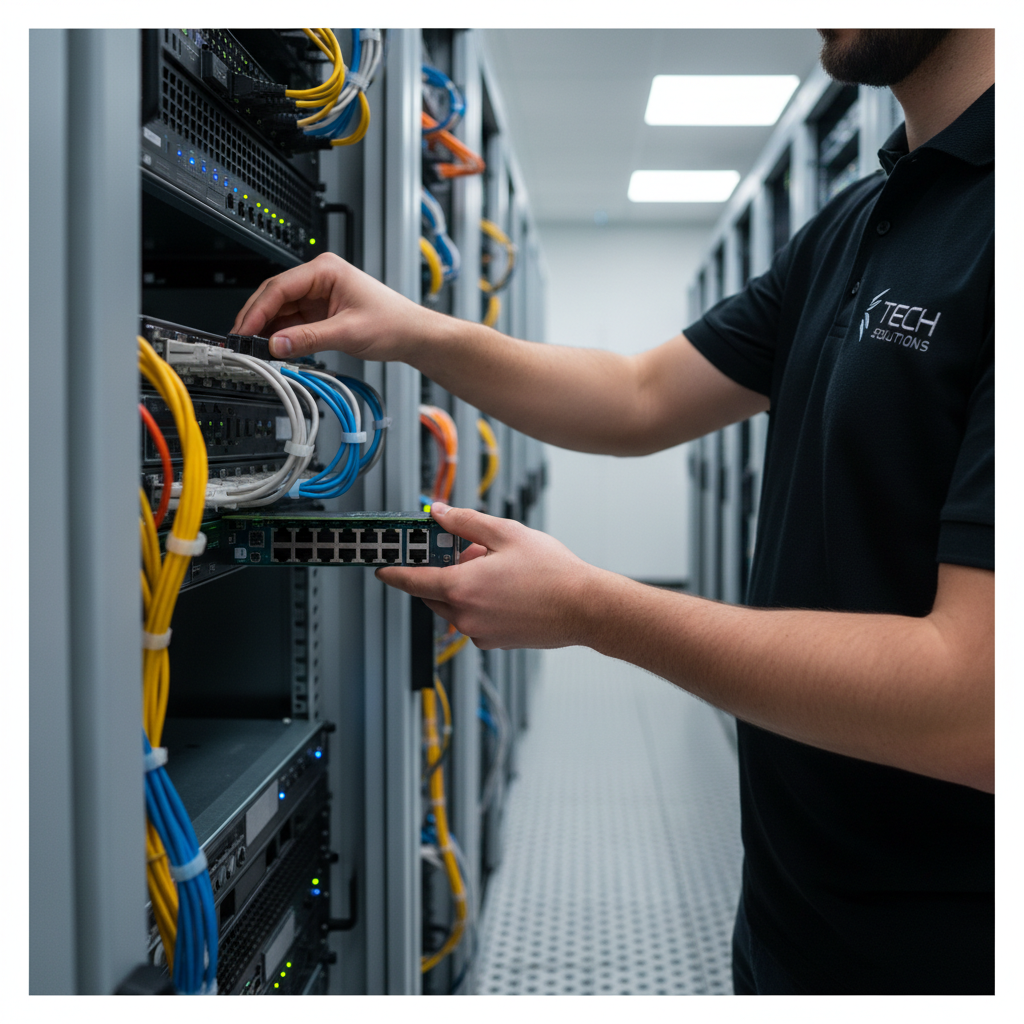
Cloud PBX offers a fully managed, scalable solution for remote teams while SIP trunking allows organizations to connect existing on-premise hardware to the internet. When evaluating Cloud PBX vs SIP Trunking Canada business, companies with established hardware often choose SIP trunks for cost efficiency; however, startups typically prefer cloud systems for their low upfront investment. The best choice for your organization depends on whether you prefer to maintain physical infrastructure or leverage a maintenance-free hosted environment.
Canadian business owners often struggle with escalating telecommunications costs and rigid legacy infrastructure that cannot keep up with a hybrid workforce. Choosing between a fully hosted Cloud PBX and a SIP Trunking solution is not just a technical decision; it is a strategic move that affects your operational scalability and long-term bottom line. In the Canadian market, where compliance and local reliability are paramount, understanding these nuances is critical for staying competitive through 2026. This guide provides a practical comparison of deployment models, including costs, security, and maintenance. We will explore how platforms like 3CX and Yeastar bridge the gap between traditional hardware and modern cloud flexibility. By the end of this article, you will have a clear five minute decision framework to select the communication model that best aligns with your specific growth objectives and budget requirements.
Navigating the Canadian Business Telecommunications Landscape in 2026
The Canadian telecommunications landscape is shifting away from legacy infrastructure at an accelerated pace. Recent data indicates that traditional PSTN landline usage has dropped by 18.1 percent, marking a definitive end to the era of copper-wire dominance. For organizations across Ontario and the rest of the country, the strategic focus has shifted to choosing between Cloud PBX vs SIP Trunking Canada business models to maintain reliable connectivity.
Alpha Telecom Services, based in Toronto, specializes in guiding businesses through this digital migration. Our primary goal is to help you strike a precise balance between monthly operational costs, internal infrastructure control, and mandatory CRTC compliance. With the sunsetting of traditional lines, selecting Canadian Cloud PBX solutions or modernizing an existing setup with 3CX PBX phone systems is no longer optional. This article clarifies the technical distinctions to ensure your choice supports both current efficiency and long term scalability within the specific regulatory environment of the Canadian market.
Understanding the Three Core Deployment Models

To effectively compare Cloud PBX vs SIP Trunking Canada business models, you must first understand the architecture behind how your calls are routed. In our experience at Alpha Telecom Services, most Toronto organizations fall into one of three specific deployment categories based on their existing infrastructure and financial preferences.
The first model is Cloud PBX, a fully hosted solution where the PBX software resides in a secure, offsite data center. Because the provider manages all software updates, security patches, and server maintenance, this follows an Operating Expense (OpEx) model. Businesses pay a predictable monthly per-user fee rather than investing in server hardware. Canadian Cloud PBX solutions are particularly effective for firms that want to eliminate the burden of managing physical telecommunications equipment.
The second is the traditional On-Premise PBX. This involves physical hardware installed directly in your Toronto office. This is a Capital Expense (CapEx) model requiring a significant upfront investment in servers and physical infrastructure. While it offers maximum local control, it also requires dedicated internal IT resources or professional technical support to manage the hardware lifecycle.
SIP Trunking serves as the vital bridge between these two worlds. It allows businesses with a functional on-site IP PBX, such as Yeastar phone systems or 3CX PBX phone systems, to connect to the public telephone network via the internet. It replaces legacy PRI or analog lines without forcing you to scrap your existing hardware, providing a path to VoIP efficiency while protecting your initial hardware investment.
Model | Primary Financial Category | Hardware Location | Management Responsibility |
|---|---|---|---|
Cloud PBX | OpEx (Monthly Fee) | Offsite Data Center | Service Provider |
On-Premise PBX | CapEx (Upfront Cost) | Local Toronto Office | Internal IT / Alpha Telecom |
SIP Trunking | Mixed / Bridge | Local (Existing) | Provider (Line) / Internal (PBX) |
SIP Trunking in Canada: Costs, Channels, and Compliance
Navigating the financial and regulatory details of SIP Trunking requires a clear understanding of how Canadian carriers bill for service. Unlike the per-user model common in Canadian Cloud PBX solutions, SIP Trunking is primarily priced by channels. A channel represents a single concurrent call path. For a Toronto business, this means you do not necessarily need a channel for every employee; instead, you provision capacity based on your peak simultaneous call volume. In the current market, Canadian businesses can expect to pay between CAD $15 and $25 per month per channel.
One of the most critical factors often overlooked in generic guides is the strict regulatory environment managed by the CRTC. To combat the rise of fraudulent robocalls and caller ID spoofing, Canada has mandated the implementation of STIR/SHAKEN (Secure Telephone Identity Revisited and Signature-based Handling of Asserted Information Using toKENs). This protocol ensures that caller ID information is authenticated as it moves across IP networks. When evaluating Cloud PBX vs SIP Trunking Canada business options, ensuring your provider is fully compliant with these CRTC standards is mandatory. Non-compliant calls may be blocked or flagged as "Likely Spam" by major Canadian carriers, which directly impacts your business's ability to reach clients.
For organizations maintaining Yeastar phone systems or 3CX PBX phone systems, transitioning to SIP trunks provides a scalable way to modernize without replacing hardware. However, this transition requires professional technical support to configure local firewalls and ensure that the STIR/SHAKEN headers are correctly passed through your on-site equipment to avoid service interruptions.
Cloud PBX Benefits for Canadian Small to Mid-Sized Businesses

Building on the regulatory and channel-based complexities of SIP, many small to mid-sized organizations are opting for the simplicity of hosted infrastructure. Hosted solutions are currently booming across Canada because they decouple professional communication from a physical office location. When evaluating the Cloud PBX vs SIP Trunking Canada business landscape, the most immediate advantage of a hosted system is the elimination of high upfront capital costs. Instead of purchasing and installing a local server, companies pay a predictable monthly fee, typically ranging from CAD $20 to $50 per user.
This model is ideal for businesses managing aging legacy hardware that can no longer support modern features like mobile twinning or advanced analytics. By migrating to Canadian Cloud PBX solutions, you transfer the entire maintenance burden to the provider. Security patches, feature enhancements, and system updates occur automatically. This shift removes the requirement for specialized on-site IT staff to manage the telephony stack, allowing your team to focus on core operations.
Geographic flexibility provides another significant edge. For a Toronto-based firm expanding into other provinces, Cloud PBX allows for the instant addition of users in Vancouver or Halifax without hardware installation or onsite configuration. This seamless scalability ensures that remote or hybrid employees remain fully integrated into the corporate phone system, regardless of their physical location, while bypassing the logistical hurdles of traditional hardware deployment. This level of agility often outweighs the granular control of on-premise systems, especially for firms without professional technical support available for every branch office.
The Hybrid Approach: Leveraging 3CX and Yeastar Hardware

While hosted solutions offer simplicity, the Cloud PBX vs SIP Trunking Canada business landscape is not limited to a binary choice. Many Toronto organizations find that their specific operational requirements are best served by a hybrid deployment that combines local hardware control with the cost efficiency of SIP connectivity.
Platforms like 3CX PBX phone systems and Yeastar phone systems are engineered for exactly this purpose. These systems can be deployed as physical on-site appliances or virtualized on local servers; they utilize SIP trunks to route calls over the internet while maintaining a physical footprint in your facility. This configuration allows you to retain direct authority over your internal network while slashing monthly overhead by moving away from legacy landline providers.
This architecture is often paired with professional hardware like Yealink IP phones. These devices provide a reliable, feature rich interface for staff while leveraging the advanced routing and security capabilities of the local PBX. At Alpha Telecom Services, we specialize in these specialized configurations. Our team provides the professional technical support necessary to manage firewall traversals and ensure your local infrastructure integrates seamlessly with modern SIP protocols. This approach allows businesses to maintain the granular control of an on-premise system without sacrificing the modern features found in Canadian Cloud PBX solutions.
Direct Comparison: Scalability, Maintenance, and Security
Evaluating the Cloud PBX vs SIP Trunking Canada business landscape requires a look at long term operational overhead and growth projections. Scalability remains the primary advantage for Canadian Cloud PBX solutions. For a rapidly expanding Toronto startup, adding twenty new seats is a software configuration that takes minutes. In a SIP Trunking environment, while adding channels is simple, the underlying hardware, such as Yeastar phone systems, has a finite capacity for concurrent calls and extensions. Once that limit is reached, a physical hardware upgrade becomes necessary.
Maintenance requirements also differ significantly. Cloud platforms are managed entirely by the provider; updates and security patches happen in the background. Organizations opting for SIP Trunking with 3CX PBX phone systems retain more responsibility. This model requires professional technical support to manage local server health, firmware updates, and network configurations.
Security preferences often lean toward on-premise setups for high-compliance industries in Ontario, such as legal or financial services. These sectors often prefer the granular control of keeping voice traffic behind their own dedicated firewalls and internal monitoring tools. This control is a high-value asset for those with strict data residency requirements, provided the local network is professionally hardened against external threats.
Feature | Cloud PBX | SIP Trunking (On-Premise) |
|---|---|---|
Scalability | Instant and virtually unlimited | Bound by physical hardware limits |
Maintenance | Fully managed by service provider | Managed locally or via support partner |
Security | Standardized provider protocols | Granular local control and custom firewalls |
Technical Needs | Minimal local IT knowledge required | Requires expertise in local IP networking |
Five Minute Decision Guide for Canadian Business Owners
To finalize the choice between Cloud PBX vs SIP Trunking Canada business models, evaluate your organization against these specific operational criteria. First, audit your current hardware lifecycle. If you have recently invested in 3CX PBX phone systems or Yeastar phone systems that are not yet end of life, SIP trunking allows you to modernize connectivity while protecting that capital expenditure. If you are starting fresh or replacing a legacy PSTN system, Canadian Cloud PBX solutions offer a faster path to deployment with zero local hardware requirements.
Second, consider your team's physical location. A hybrid or fully remote workforce in Ontario benefits most from the flexibility of a hosted platform. Use the table below to determine which path aligns with your current resources.
If your business... | Recommended Model |
|---|---|
Has a modern IP PBX and dedicated IT resources | SIP Trunking |
Operates with a hybrid or remote workforce | Cloud PBX |
Lacks on-site professional technical support | Cloud PBX |
Requires granular control over local network firewalls | SIP Trunking |
Selecting the right model depends on balancing your need for local control against the simplicity of a managed service. Ensure your Toronto office has a reliable fiber connection to maintain high definition voice quality across all concurrent channels.
Choosing between SIP trunking and a modern phone system depends on your specific infrastructure and business goals for 2026. While one offers control, the other provides unmatched flexibility. If you want expert help navigating these options, Alpha Telecom Services is here to guide you. We can help you determine if a Cloud PBX fits your current workflow or if another solution better serves your team. Finding the right fit ensures your communication remains seamless as your company continues to grow and evolve.